How it works
The data center
We propose modular, liquid-cooled data halls that would capture heat for nearby users. Each hall would also cool independently.
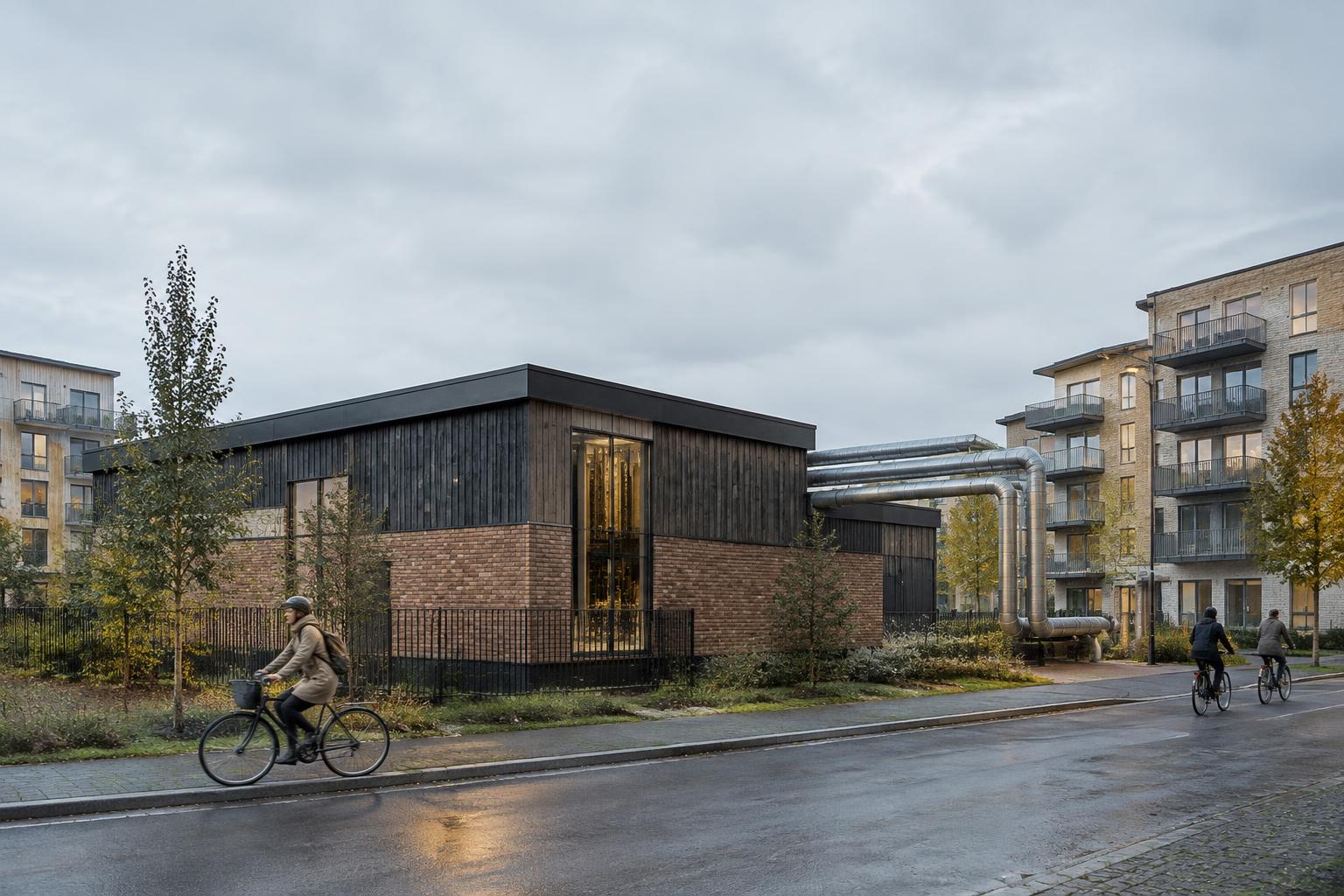 Conceptual illustration
01
Where the halls would go
We propose modular natural gas fuel cells immediately next door to Central Hudson's existing regulator parcel at East Strand's eastern end. Separate batteries (BESS) and electrical distribution would sit on flood-resilient platforms. Utility capacity, environmental review, setbacks, and permits would decide whether this could proceed. No adjoining parcel is identified as a project site. Halls would extend westward only where actual land depth and setbacks allowed, screened behind glasshouses and promenade gables.
02
Modular AI halls
We would start with 4.8 MW of computing (IT load), then a 9.6 MW first node. Later steps would depend on evidence. We assume the site would use about 15% more power than the computers alone (a PUE of 1.15).
03
Liquid cooling
Liquid cooling at the chips would capture heat in water at higher temperatures than air cooling. That would help glasshouses, homes, and a district heat network use it.
04
Heat recovery first
Heat exchangers and pumps would be included in the first design and sized for the intended customers.
05
Independent cooling
Each hall would have full-load independent closed-loop cooling, even when no customer needed heat. No creek withdrawal or discharge is planned.
Illustrative estimate
Heat and energy calculator
Nearly all electricity used by computers becomes heat. This estimates annual quantities from your assumptions. Nothing has been measured.
Theoretical recoverable computer heat
30.3
GWh of low-grade heat per year
- Assumptions & limits
- Recoverable GPU heat = IT load × average load factor × recovery × 8,760 h ÷ 1,000. Treats IT electricity as equal to heat output.
- These theoretical upper limits omit seasonal demand, distribution losses, heat-pump electricity, and downtime. They are not forecasts or commitments.
- 4.8 MW of computing (IT load) is the proposed pilot and 9.6 MW the proposed first node. *16.8, 24 and 42 MW are conditional later scenarios; 42 MW IT is a study ceiling with no approval or binding commitment. Gas capacity and legal thresholds require utility and counsel verification.