Skip to content
WORKLOAD / KINGSTON

Daily life

Homes & Neighborhoods

We propose modest furnished corporate residences on the hillside across East Strand, primarily for visiting engineers, researchers, AI customers, and regional businesses. Flexible extended stays, coworking, reliable connectivity, and recovered heat would support their visits. Housing partners would set the scale and operating model with City and neighborhood review. No affordability, occupancy, zoning approval, or housing agreement is promised.
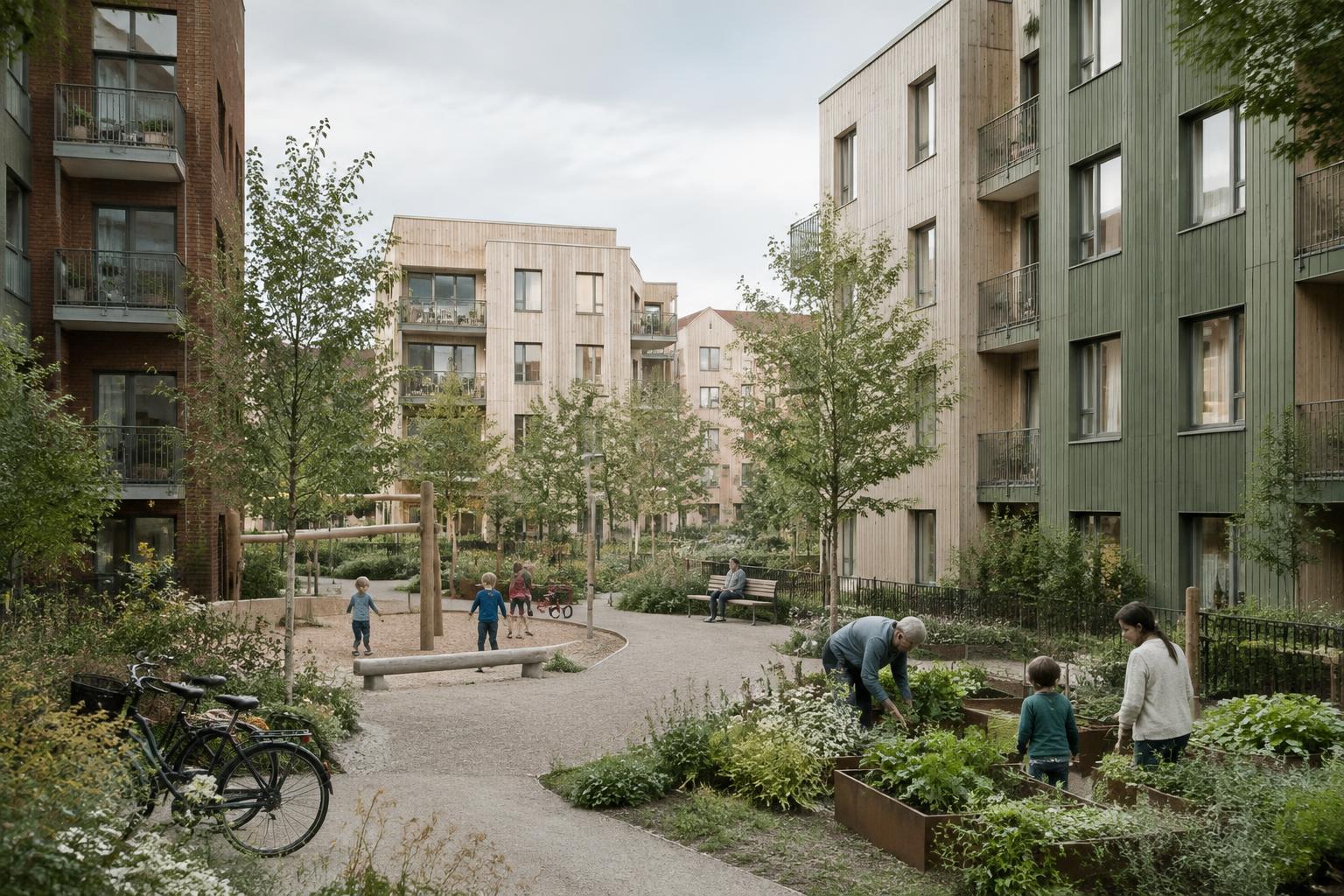
Conceptual small-scale housing around a shared gardenConceptual illustration
Conceptual shared residential courtyard. Furnished corporate residences are proposed across East Strand; this is not an approved design.

01

Furnished residences for visiting teams

Housing partners would develop furnished residences primarily for engineers, researchers, AI customers, and regional businesses visiting Kingston. Flexible extended stays and shared coworking would need demand research and an operating plan. The City and neighbors would review scale, traffic, land use, and the effect on the neighborhood. No number of residences, affordability, occupancy, or zoning approval is promised.

02

A possible heat network

A utility-run heat network could provide heat and hot water to homes, with heat pumps raising the temperature where needed. Backup supply would keep homes warm when the data center was offline.

03

Utility rules

Selling heat or electricity to residents would be subject to New York Public Service Commission regulation and utility tariffs.

04

The neighborhood around the homes

The road, creek edge, and wooded bluff would guide the layout. Homes would be across East Strand. The waterfront would remain for a public walk, independent businesses, and cultural uses.

A proposed free electric trolley could connect Uptown and the waterfront, starting with weekend and event service. It would need the county transit system's agreement. Parking on the strip would be limited to drop-off and access.

Residents would help shape the residence scale and neighborhood protections and how the proposed community charge was spent. Night sound limits and public monitoring would remain part of the proposal.

Community charge and neighborhood protections. Boats, businesses, and proposed trolley service.

05

Operating economics

Corporate stays and coworking could bring business to local restaurants, shops, and services, but demand and occupancy need independent study. Residence economics must include fit-out, staffing, maintenance, connectivity, backup heat, financing, and applicable taxes. Shuttle economics must include vehicles, drivers, accessible boarding, luggage, reservations, insurance, maintenance, bridge tolls, winter operation, and depot charging subject to microgrid capacity. Ferry economics must include vessels, crews, insurance, berth rights, maintenance, charging, cancellations, and accessible last-mile transport. Fares, revenue, subsidy needs, and any corporate bookings remain unresolved. The proposed community charge remains a data hall expense before investor distributions; no residence, shuttle, or ferry subsidy is committed.

06

Station access for visiting teams

A proposed electric commuter shuttle could connect the waterfront to Rhinecliff trains via the Kingston–Rhinecliff Bridge from Phase 1. Corporate residence pickups would follow if the homes proceeded. Accessible boarding, luggage, reservations, optional Uptown stops, actual train schedules and delay information, and depot microgrid charging would need review. A later ferry would complement the shuttle. No service, journey time, operator, or Amtrak partnership is confirmed.

Road, water and rail · proposed

Connections to Rhinecliff trains

Phase 1 option · subject to review

Electric shuttle via the bridge

We propose an electric commuter shuttle between the Kingston waterfront, future corporate residences across East Strand, and Rhinecliff Amtrak station via the Kingston–Rhinecliff Bridge. It could be a practical year-round option from Phase 1, subject to review, before a later ferry. Residence pickups would be added only if those homes proceeded. The shuttle and ferry would complement each other; neither service is confirmed.

Plan departures around actual Amtrak schedules, station arrival requirements, and authorized delay information where available. Study accessible boarding and station drop-off, wheelchair space, luggage storage, reservations, optional Uptown stops, winter road conditions, staffing, insurance, bridge tolls, permits, and operating costs. Depot charging from the district microgrid would depend on verified capacity, vehicle range, charging windows, and reserve energy. No journey time, fare, Amtrak partnership, operator, timetable, guaranteed connection, or operating commitment is established. No live timetable or delay integration exists yet.

Phase 2 option · separate marine review

A later passenger ferry

We propose a passenger ferry landing and small gabled pavilion in the Nyhavn-inspired public promenade, connecting Kingston Rondout to the Rhinecliff Amtrak station area. A timetable would follow actual train arrivals and departures, using authorized delay feeds where available and allowing time for boarding and the last-mile transfer. No Amtrak partnership, ferry operator, service, dock rights, or walking access to the station is confirmed.

Study the Rhinecliff landing and legal, accessible last-mile station access before choosing either berth. Navigability, channel depths, currents, wake, seasonal ice, weather cancellations, and fallback travel would shape reliability. USCG vessel and operating requirements, marine and local permits, accessible gangways across tide levels, and emergency arrangements require review. Battery-electric vessels and charging remain a feasibility study, including range, reserve energy, shore-power capacity, charging time, fire safety, and approvals. No crossing time, capacity, fare, or guaranteed train connection is proposed.

Existing-road corridor: East Strand → Broadway → Garraghan Drive → US 9W → NY 32 → NY 199 / Kingston–Rhinecliff Bridge → River Road → Rhinecliff Road → Charles Street / station approach. Waterfront boarding and future residence pickups would need safe, accessible stops. Optional Uptown stops are a separate study, not part of the drawn corridor. The later ferry is a conceptual water connection from Rondout to the Rhinecliff station area.

Amtrak lists Rhinecliff at 455 Rhinecliff Road, with an accessible platform and no elevator. That does not establish accessible shuttle boarding or travel from a future ferry landing. Both options would need the station’s required arrival margin and verified transfer arrangements. The shuttle could also offer a fallback for ferry cancellations, subject to available vehicles and an agreed operating plan; no year-round reliability or train connection is guaranteed.

Road geometry: OpenStreetMap via OSRM, retrieved November 26, 2026. Station coordinate record: November 6, 2017; queried November 26, 2026. Water approach points are illustrative. A marine survey would determine any usable track.